Utilities & Power
Utilities & Power
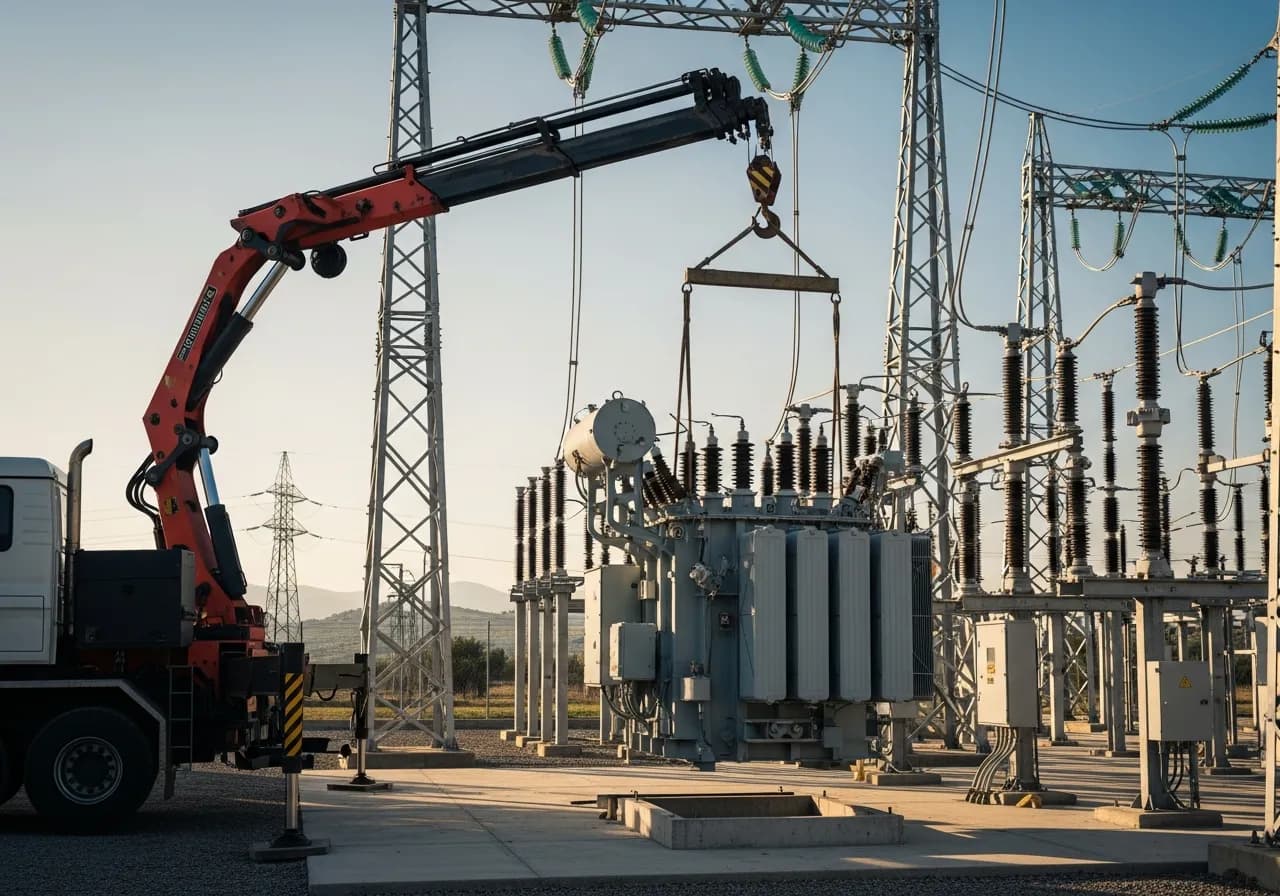
Utilities set transformers, switchgear, poles, transmission steel and substation equipment on tight outage windows where the lift cannot run long. Kranes supplies boom-truck, mobile and all-terrain cranes for substation, distribution and generation work, operated and certified, ready to mobilize for planned work or storm response. Tell us the equipment, the radius and the outage window, and we quote the crane and operation to land it inside the time you have.
Typical applications
- Transformer & switchgear setting
- Pole & transmission steel
- Substation equipment placement
- Storm & outage response
Crane solutions for Utilities & Power
Key Takeaways
- ✓Key features: Transformer & switchgear setting, Pole & transmission steel, Substation equipment placement
Utility lifting runs on tight outage windows: transformers, switchgear, transmission steel, poles and substation equipment set in hours, not days, often with the power off and a hard restart time. Boom trucks place poles, distribution gear and lighter substation loads efficiently across a route; mobile and all-terrain cranes set transformers and heavier substation equipment; and storm response demands a crane that can mobilize fast to wherever the damage is. Kranes supplies boom-truck, mobile and all-terrain cranes for substation, distribution and generation work, operated and certified, ready for planned outages or emergency storm response. The outage clock is unforgiving, so the crane and crew are sized and staged to land the equipment inside the window and clear the site for re-energization.
Utilities & Power — The work
The same fleet that does planned work answers the storm call. Every utility lift starts with the equipment weight, the radius, the access and the outage window. Send those and Kranes returns the crane and certified operation to set it inside the time available, with rigging matched to energized-environment rules. Because the window is fixed and short, mobilization and the lift sequence are planned so the crane is productive the moment the outage starts.
The right crane
Around energized equipment the certification and the rigging discipline are the safety case, so every crane follows the OSHA 1926 Subpart CC power-line rules and every operator is NCCCO-certified. Kranes keeps the fleet serviced and stocked so a unit is ready for the next planned outage or the next storm. Tell us the equipment, the radius and the window, and we quote the crane and operation to land it inside the time you have.
“Ensure that no part of the equipment, load line, or load (including rigging and lifting accessories), gets closer than 20 feet to the power line by implementing the measures specified in paragraph (b) of this section.”
Why Kranes for Utilities & Power work
Related industries
Utilities & Power across the United States
Questions about cranes for Utilities & Power
What is the 10-foot rule for cranes?
The "10-foot rule" is the common name for keeping cranes, loads and rigging a minimum distance from overhead power lines. In general industry, OSHA 29 CFR 1910.333 sets 10 feet for lines up to 50 kV, plus 4 inches for every 10 kV above that. For cranes used in construction, OSHA 29 CFR 1926.1408 is stricter: if any part of the crane, load line or load could come within 20 feet of a power line up to 350 kV, the employer must de-energize and ground the line, keep a 20-foot clearance, or use the voltage-based clearance table. Every Kranes lift plan checks for overhead lines, and certified operators keep the required clearance throughout the lift.
Get a crane quote for Utilities & Power?
Tell us the lift and we send a quote within 24 hours.