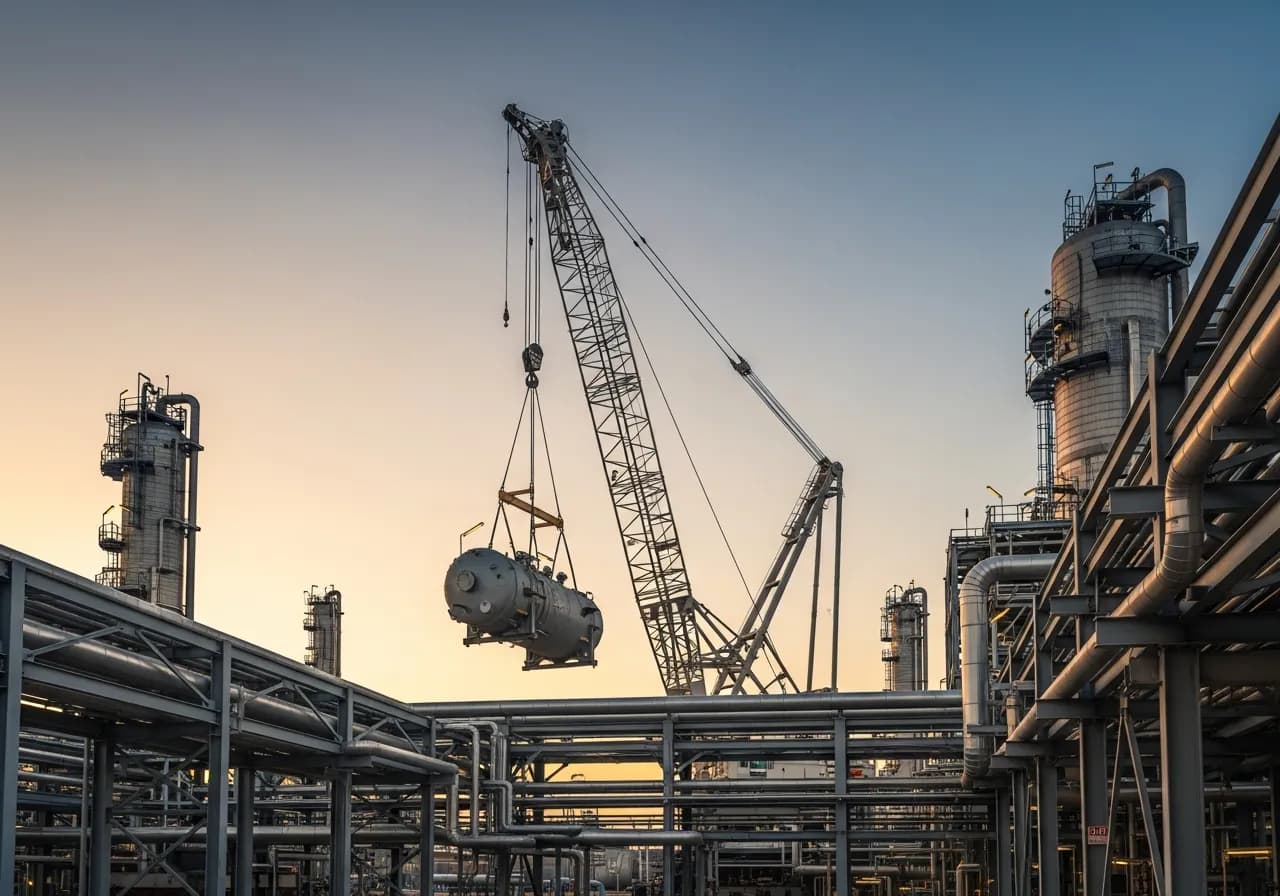
Oil, Gas & Energy
Oil, Gas & Energy
Energy facilities set vessels, modules, exchangers and piping that are heavy, scheduled and safety-critical, often inside live plant where every pick is planned. Kranes supplies high-capacity mobile, crawler and all-terrain cranes for construction, turnarounds and maintenance, with certified operation and the documentation these environments require. Tell us the heaviest module, the radius and the site rules, and we quote the crane, rigging and engineering support to execute the lift plan.
Typical applications
- Vessel & module setting
- Turnaround & maintenance lifts
- Exchanger & piping placement
- Engineered heavy lifts
Crane solutions for Oil, Gas & Energy
Key Takeaways
- ✓Key features: Vessel & module setting, Turnaround & maintenance lifts, Exchanger & piping placement
Energy lifting is engineered work: vessels, modules, exchangers, compressors and piping spools that are heavy, scheduled and safety-critical, often set inside a live plant where every pick is planned to the centimeter. High-capacity mobile and all-terrain cranes handle construction and maintenance picks; crawler cranes take the heaviest modules at radius; and tandem or engineered lifts combine machines for the largest single components. Kranes supplies high-capacity mobile, crawler and all-terrain cranes for energy construction, turnarounds and routine maintenance, with certified operation and the documentation these environments require before a crane is allowed on site. Turnarounds run to a fixed schedule with severe penalties for overrun, so the crane, rigging and crew are planned into the lift sequence rather than added to it.
Oil, Gas & Energy — The work
One supplier covers the equipment, the operation and the engineered-lift support. Every energy lift starts with the heaviest module, the radius, the lift height and the site rules. Send those and Kranes returns the crane class, the rigging, the ground-bearing and engineered-lift support, and the certified crew to execute the lift plan. Inside a live facility the plan, the permits and the exclusion zones matter as much as the capacity, so all of it is coordinated before the pick.
The right crane
In oil, gas and energy the documentation is the difference between a lift that proceeds and one that is stopped, so every crane is inspected to OSHA and ASME B30 and every operator is NCCCO-certified, with records ready for site audit. Kranes keeps service and parts behind the fleet through a turnaround so a failure does not blow the schedule. Tell us the module, the radius and the site rules, and we quote the crane, rigging and engineering to execute it.
“A competent person must begin a visual inspection prior to each shift the equipment will be used, which must be completed before or during that shift.”
Why Kranes for Oil, Gas & Energy work
Related industries
Oil, Gas & Energy across the United States
Questions about cranes for Oil, Gas & Energy
How much does crane rental cost?
There's no honest flat rate — crane rental (or crane hire) is priced per job. The main drivers are the crane class and capacity, how long you need it (hourly, daily, weekly or by project), whether you need a certified operator, the rigging required, and site access. A small boom-truck pick costs a fraction of a multi-day mobile or tower-crane job. Rather than quote a misleading average, Kranes prices your exact lift: send the load, the radius, the lift height and the timing, and we return a clear, itemized quote within 24 hours so you can budget with confidence. Longer commitments usually lower the effective rate.
What is the 3-3-3 rule for cranes?
The 3-3-3 rule is a quick safety habit some operators use: take three seconds to start a movement smoothly, hold steady for three seconds, and take three seconds to stop — keeping loads from swinging through sudden acceleration or braking. It's a rule of thumb, not a regulation, and it never replaces a proper lift plan, load chart and the operator's judgment. On any Kranes lift, NCCCO-certified operators follow the manufacturer's load chart and OSHA 1926 Subpart CC practice, with the rigging and ground conditions verified before the load leaves the ground. If a load starts to swing, the operator stops and lets it settle before moving again.
What does "crane services" mean?
"Crane services" covers everything around getting a load lifted safely beyond just the machine: supplying the crane (sale or rental), providing certified operators, planning and engineering the lift, rigging, and the ongoing maintenance, inspection, certification and parts that keep a crane compliant. As the nationwide supplier, Kranes covers all of it — sales, rental, service and parts — from one request. You describe the job; we provide the crane and the certified support to complete it, then keep it running afterward. That includes inspection records, certified operators and a written quote that spells out every part of the scope before the crane mobilizes.
What is the difference between a gantry crane and an overhead crane?
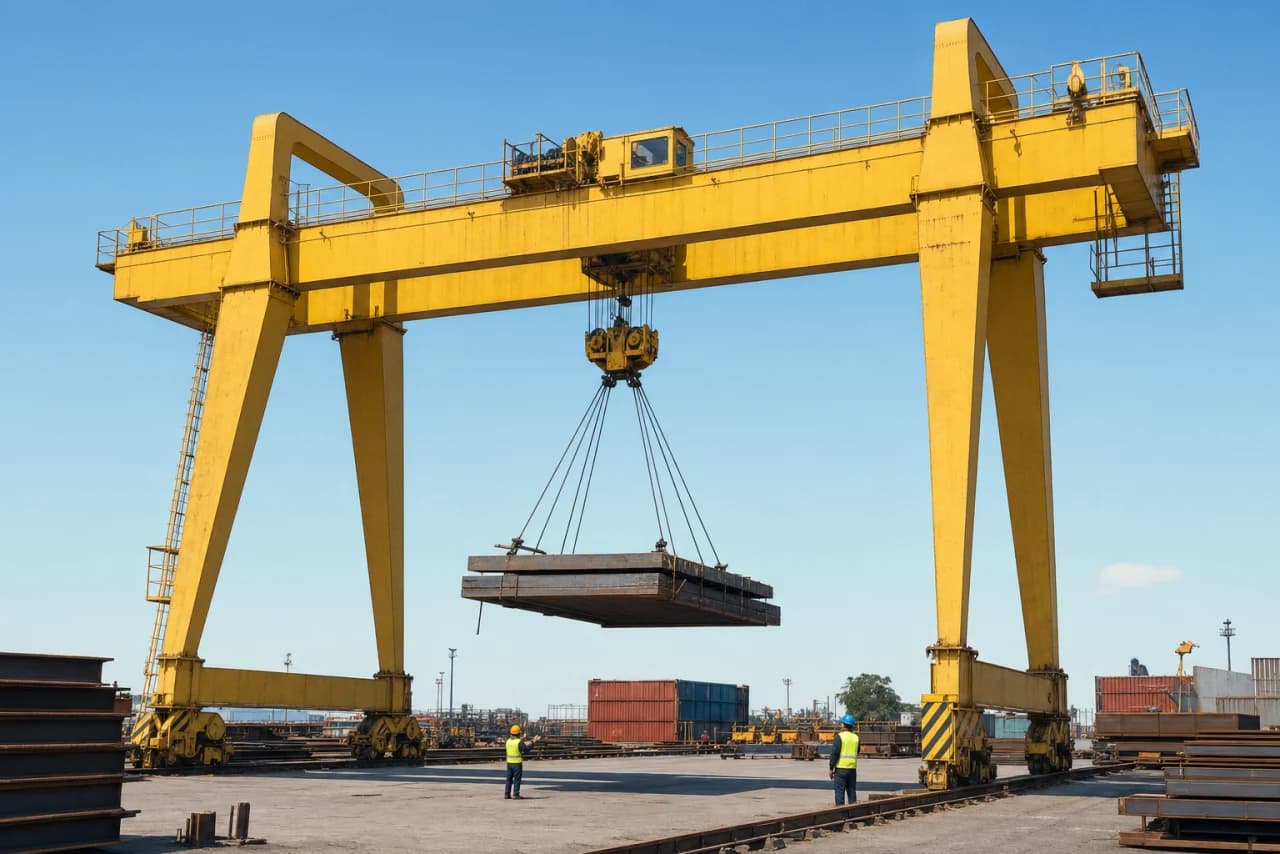
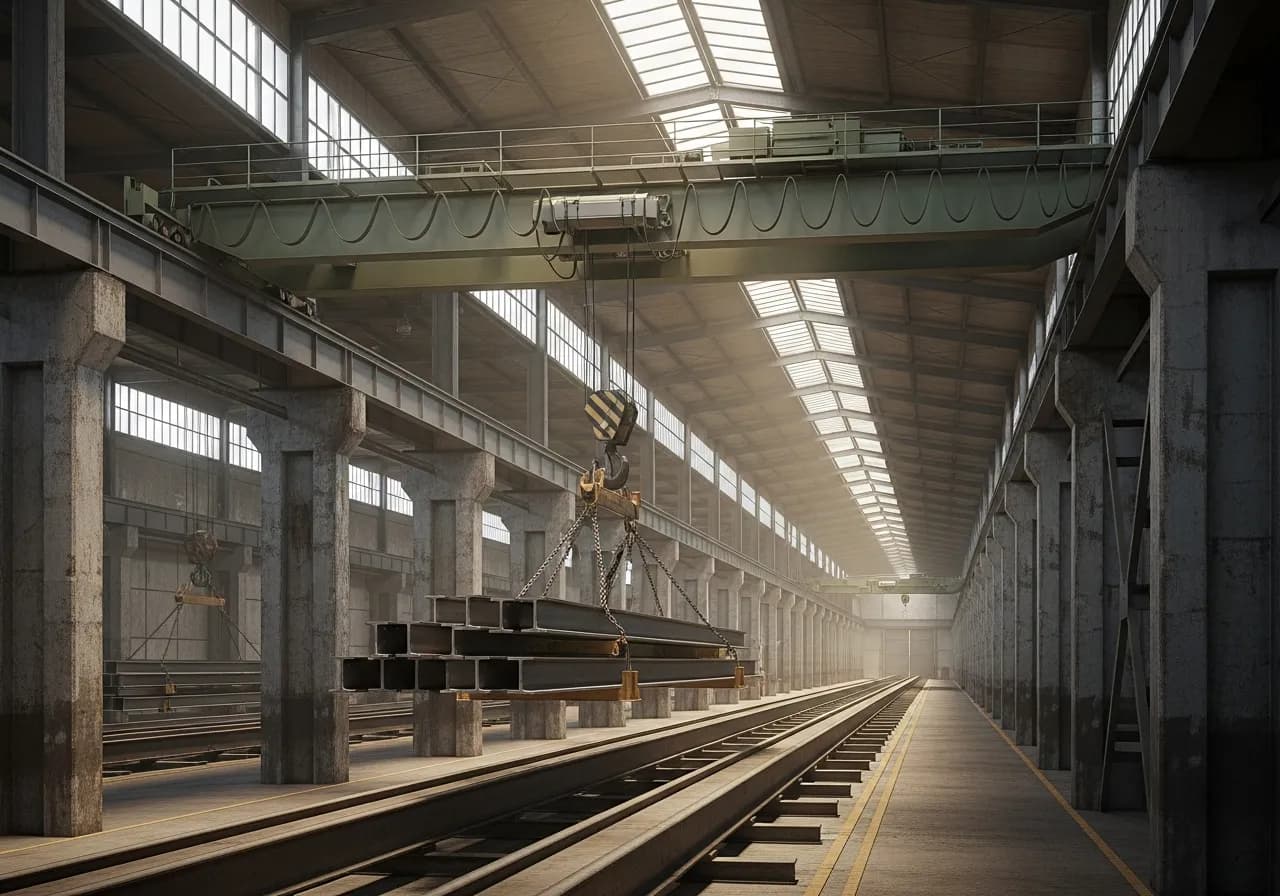
Both run a hoist along a bridge, but the support is different. An overhead (bridge) crane carries its bridge on runway beams fixed to the building structure, so it clears the floor entirely and reaches the highest hook positions. A gantry crane carries the same bridge on freestanding legs that run on floor rails or castors, so it needs no building steel and can work outdoors, in yards or anywhere a runway can't be mounted overhead. Overhead cranes suit permanent in-bay production; gantries suit flexible, portable or outdoor lifting. Kranes supplies, installs and services both. Both are covered by OSHA 1910.179 when used in general industry.
Get a crane quote for Oil, Gas & Energy?
Tell us the lift and we send a quote within 24 hours.