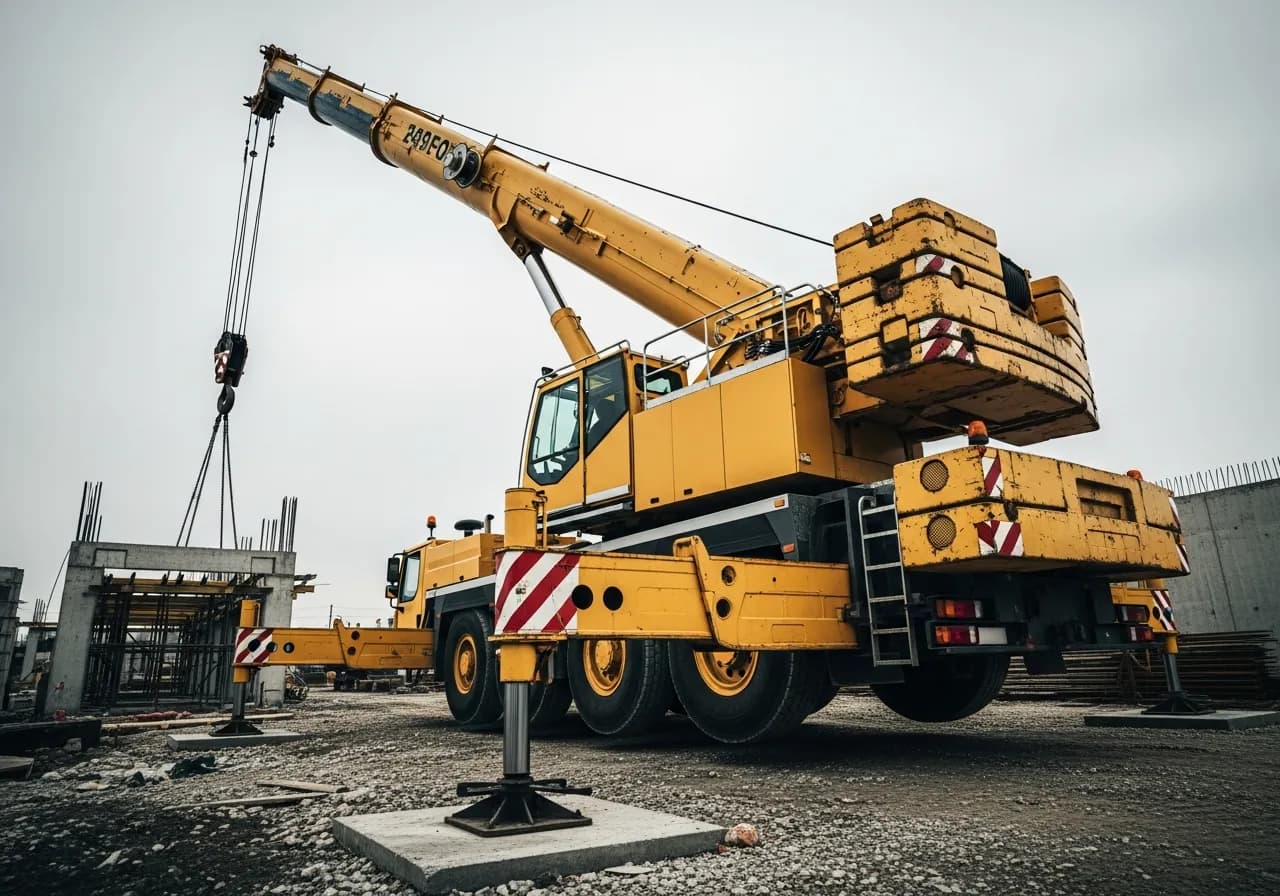
There is no honest flat rate for crane rental, and any company that quotes one before knowing your job is guessing. Crane rental pricing is built from the specifics of your lift, not a number on a price list, and understanding those specifics is the fastest way to budget accurately. The cost of a lift is built from a handful of real variables, and understanding them is the fastest way to budget accurately and avoid surprises on the day.
Crane class and capacity
The single biggest driver is the machine itself. A compact boom truck handling a rooftop HVAC unit sits at one end of the scale; a high-capacity crawler crane setting modules on an energy project sits at the other. Capacity, boom length and reach all factor in — you pay for the machine that matches your heaviest pick at your required radius and height, not the one parked closest.
Duration
Cranes are quoted hourly, daily, weekly or by the project. A short single-pick job is a fraction of a multi-week program. Mobilization and demobilization — getting the crane to and from your site — is a real cost on shorter jobs, which is why a half-day lift is rarely half the price of a full day.
Operated or bare rental
A certified operator and, where needed, a signal person or rigger add labor to the quote. Many lifts legally and practically require certified operation. Bare rental is available where you supply your own certified personnel.
Rigging and site access
Slings, spreader bars and lift planning scale with the load. Tight urban sites, soft ground requiring matting, or restricted access can require a larger crane or additional setup time — both of which move the price.
Why we quote every job
Because these variables compound, Kranes prices each lift to your exact load, radius, height and access rather than a misleading average. Send us the job — the equipment, the load, the location and the timing — and we return a clear, itemized quote, usually within 24 hours. That way the number you budget is the number you pay.
What a crane rental quote should include
A quote you can actually budget against itemizes more than the machine. Look for the crane class and capacity, the rate basis (hourly, daily, weekly or project), whether a certified operator and oiler are included, mobilization and demobilization, fuel, any required rigging or lift-planning, and the expected duration on site. A bare hourly rate with none of these spelled out is where day-of surprises come from. When the scope is written down, both sides know exactly what is — and is not — covered.
The quote, line by line
| Line item | What it covers | What moves it |
|---|---|---|
| Crane class and capacity | The machine sized to your heaviest pick at your radius | Load weight, radius and lift height |
| Rate basis | Hourly, daily, weekly or project | Length of the commitment |
| Operator and crew | Certified operator, oiler, signal person or rigger | Hours on site and lift complexity |
| Mobilization | Transport to and from site, boom and counterweight assembly | Distance and crane size |
| Rigging and lift plan | Slings, spreader bars, engineered plans | Load shape, weight and pick points |
| Site preparation | Mats, cribbing, permits, traffic control | Ground, access and street occupancy |
Five details that make the quote accurate
- Heaviest load — weight, dimensions and pick points.
- Radius and lift height — from where the crane sets up to where the load lands.
- Site address and access — ground, gate width, overhead lines.
- Dates and duration — one pick, a week or the project.
- Operated or bare — and, if bare, your operators' certifications.
Capacity is always read from the crane's load chart, which federal rules require the operator to have on hand:
"The procedures applicable to the operation of the equipment, including rated capacities (load charts), recommended operating speeds, special hazard warnings, instructions, and operator's manual, must be readily available in the cab at all times for use by the operator." — OSHA, 29 CFR § 1926.1417(c)(1)
That is why we quote from the chart at your radius, not from a headline tonnage.
How crane type changes the price
The machine is the largest single line. A boom truck for a short rooftop pick sits at the low end; a compact carry-deck or spider crane for indoor work is modest; a rough-terrain or all-terrain mobile crane for general construction is mid-range; and a high-capacity crawler or tower crane for heavy, long-duration work is the most significant. You are not paying for the biggest machine available — you are paying for the smallest one that safely covers your heaviest pick at the required radius and height. Specifying the lift accurately is the single best way to avoid over-renting.
Operated versus bare rental
Most lifts are quoted operated: a certified crane operator, and where the lift plan calls for it, a signal person or rigger. That labor is a real and necessary part of the cost, and in many cases certified operation is required by regulation and by insurers. Bare rental — where you supply your own certified personnel — is available, but only makes sense when you already employ qualified operators and carry the right coverage. The wrong call here is not a saving; it is a liability.
Site conditions that move the number
Two identical lifts can be priced very differently by the ground beneath them. Soft or uneven ground may need cribbing or matting to spread outrigger loads. A congested downtown site can mean street-occupancy permits, traffic control, or a larger crane to reach over obstructions. Restricted overhead clearance, overhead power lines, or limited setup space can all push you to a different class of machine or add planning time. The more we know about access up front, the tighter and more accurate the quote.
How to keep crane rental costs down
The biggest savings come before the crane arrives. Right-size the machine to the actual lift rather than the worst case. Batch multiple picks into one mobilization instead of several. Have the load, rigging points, and site access ready so the crane is working, not waiting. Schedule with enough lead time to avoid rush mobilization. And give whoever quotes the job complete information — a vague request gets a padded quote because the unknowns get priced in. Looking for crane rental near you? Coverage across major US cities means we can often coordinate the right machine locally and keep mobilization short.
Quick checklist before you request a quote:
- Right-size the crane to the actual lift, not the worst case.
- Batch several picks into one mobilization.
- Prepare the load, the rigging points and site access before the crane arrives.
- Book early during the construction-heavy months.
Regional and seasonal factors
Where and when the work happens matters too. Mobilization distance is a real cost, so a crane coordinated from within your market is usually more economical than one traveling a long way to reach you — one reason nationwide coverage with local quoting helps keep the number sensible. Season plays a part as well: demand tends to peak through the construction-heavy months, and booking with lead time during a busy stretch protects both availability and price. Seasons move the number too: northern winter sites can need extra setup time and ground protection over frost, Gulf and Southeast work plans around hurricane season, and desert summers push lifts to early hours — all worth flagging when you request a quote so nothing is a surprise.
Renting versus buying
For occasional or project-specific lifts, renting almost always makes sense: you pay for the machine only while it earns, with no maintenance, storage, inspection or operator-employment overhead between jobs. For a crane you would use continuously — a fixed overhead or gantry crane in a plant, for example — buying can be the better long-run economics, and we supply that too. The deciding question is utilization: how many hours the crane would actually work over a year. Because Kranes handles sales, rental, service and parts from one place, we can walk through that math honestly rather than push you toward whichever option suits us, and either way the same team supports the equipment afterward.
Insurance, certification and the cost of doing it right
Part of what separates a real crane-rental quote from a too-good-to-be-true number is what stands behind it. Certified operation, properly maintained and inspected equipment, and appropriate insurance are not optional extras — they are the baseline of a lift that will not become a much larger bill later. A quote that quietly omits these may look cheaper on paper, but the exposure lands on you if something goes wrong. When you compare options, compare like for like: a certified operator, a crane with current inspection records, and coverage in force. That is the cost of doing the lift right, and it is almost always less than the cost of doing it wrong even once.
Getting an accurate quote the first time
The single biggest influence on your quote is the quality of the information you provide. A vague request forces whoever prices it to assume the worst case and pad accordingly; a precise one lets us match the smallest safe machine and the shortest sensible schedule. Tell us the heaviest load, the radius and lift height, the ground and access, the timing, and anything unusual about the site. With that in hand we price the actual job rather than a worst-case guess, which is how the number you are quoted ends up being the number you pay.
Why we quote every job individually
Because every one of these factors compounds, a published flat rate would be wrong for almost everyone — too high for a simple pick, too low for a complex one. The honest approach is to price your actual lift. Tell us the equipment, the load, the location and the timing, and we return a clear, itemized quote, usually within 24 hours, that you can budget against with confidence.